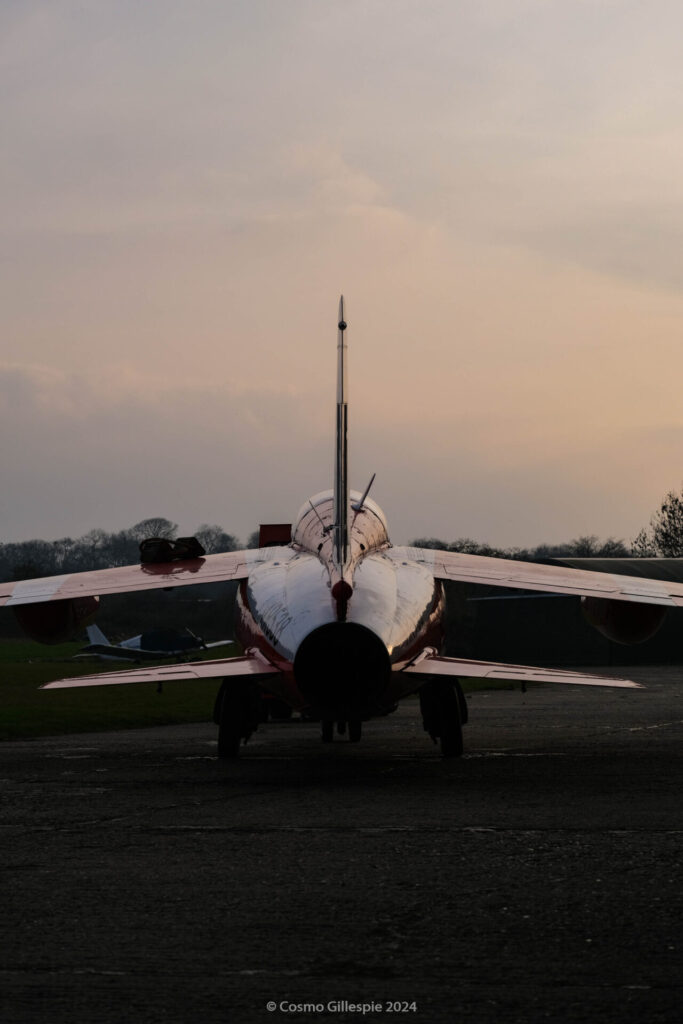
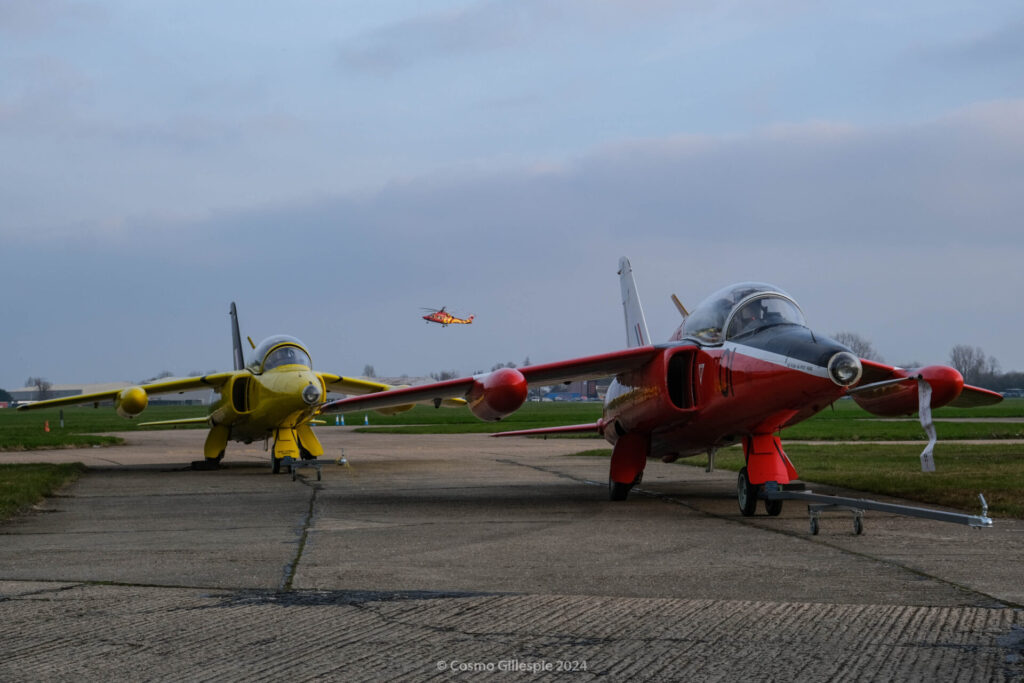
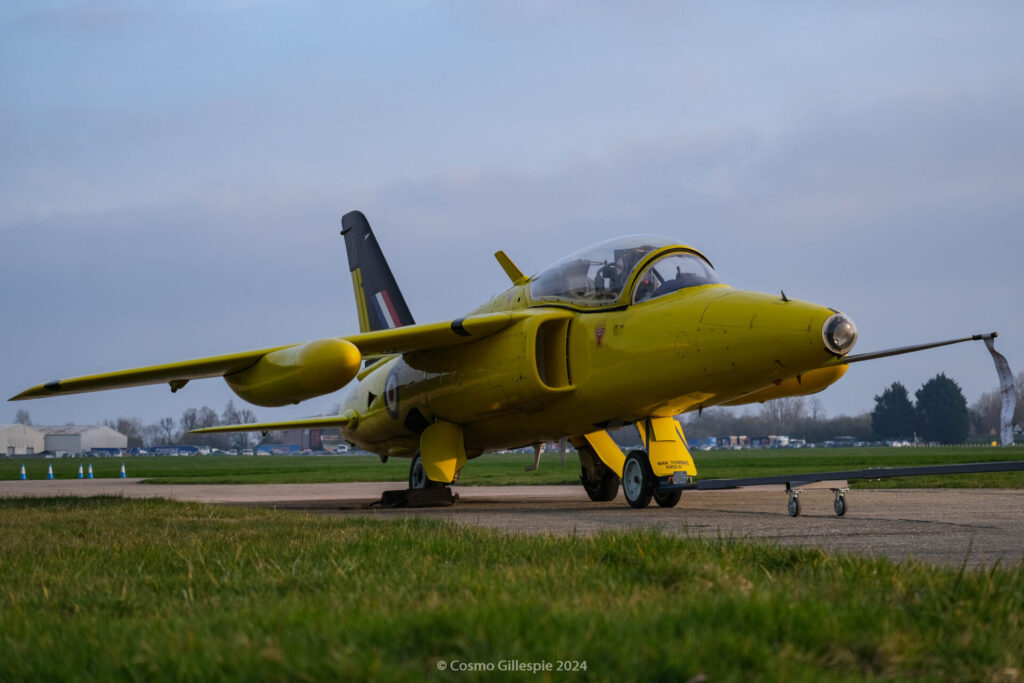
This was a fairly quiet month, with only just over a hundred photos taken, and most of those were at North Weald. A lot of familiar types showed their faces, including two Gnats, which are not too rare to see, but certainly uncommon. I was given an uncommonly good opportunity to photograph them, as, having just returned from a sortie which I later learnt had included a formation with the Red Arrows, they were parked on the hardstanding outside their hangar with towbars attached, just waiting to be manoeuvred inside. The timely arrival of the air ambulance just before they started to be moved added the perfect detail (below top right).
Another visitor was a Westland Scout, which allowed me to do more practice of long exposures- or rather, remember that I’ve already gone through the main ‘discovery’ phase of that particular skill, and that 1/60s and, particularly, a low ISO are still the best way to get tail rotor discs and main rotor blade blur as long as the day isn’t unusually bright.
Below left: The definition of overexposed. 1/60s, f/22, ISO 8000, unedited. Below right: Much better, with only one setting changed. 1/60s, f/22, ISO 1000, unedited.


There were also some successes, though notably none of the long exposures. Sometimes, especially in fast-moving situations such as aircraft taking off, it’s better just to go with automatic settings to guarantee some results. I have also found that the colours are worse in photos taken with manual settings, something which is probably construed by the camera and I will have to look into.


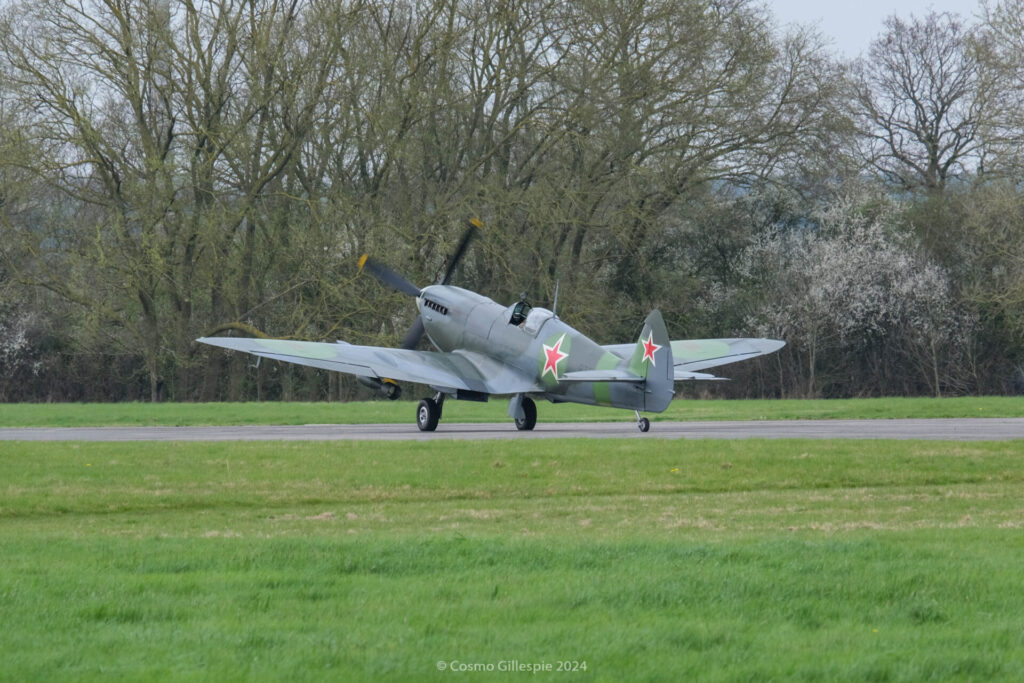
A Spitfire also made a passing appearance, mainly in the distance, but offering a couple of nice and clear backgrounds, including against the hangar it lives in. There were no tries for a prop disc; it was moving so quickly and so far away that I knew good results would be somewhere between unlikely and impossible. I’m happy with the shots that I did get, though, as despite my perspective being from the back of the aircraft, which has a tendency to be both unflattering and unintresting, I have caught some good proflies and details of the top of the wing, which are not as possible when shooting from the front.

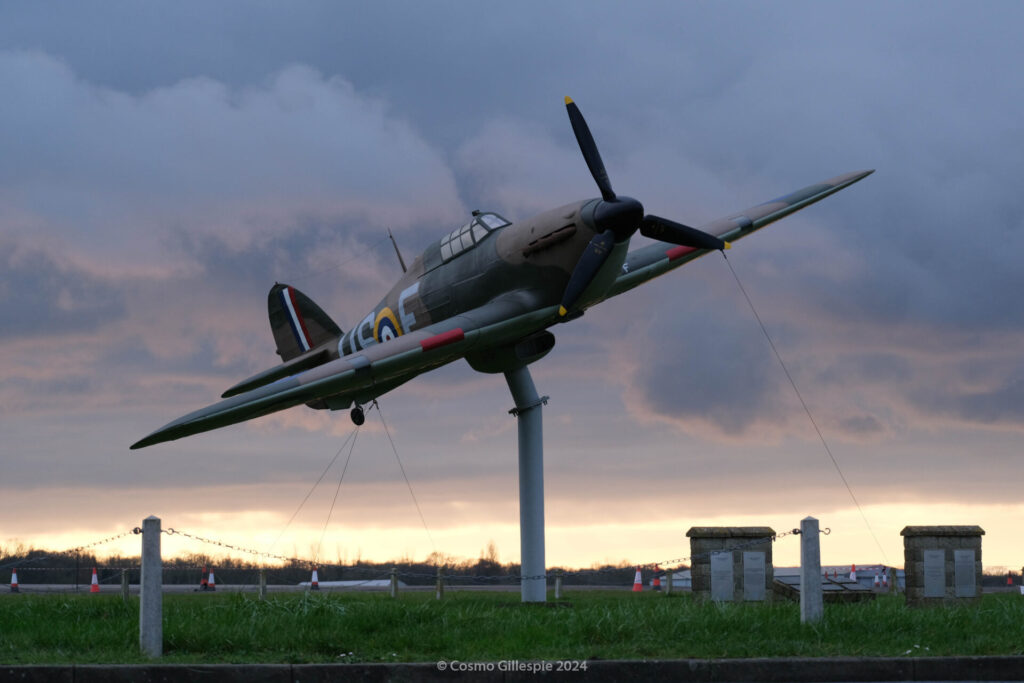
The addendum to these shots is the Hurricane gate guardian, which was once again paired with a brilliant sunset. This time, however, instead of committing to a silhouette of the aircraft as I have in the past, I aimed to end up with a good exposure of both the sky and the aircraft. Taking just one photo which fell into a middle ground, not better for one element than the other (below left), I then did two edits of it, one to properly adress the aircraft, the other to adress the sky. When the good aircraft was cut out and placed onto the good sky, an easy task as there was, naturally, no position change or unwanted overlap between them, they produced the exact final result that I was hoping for (below right).

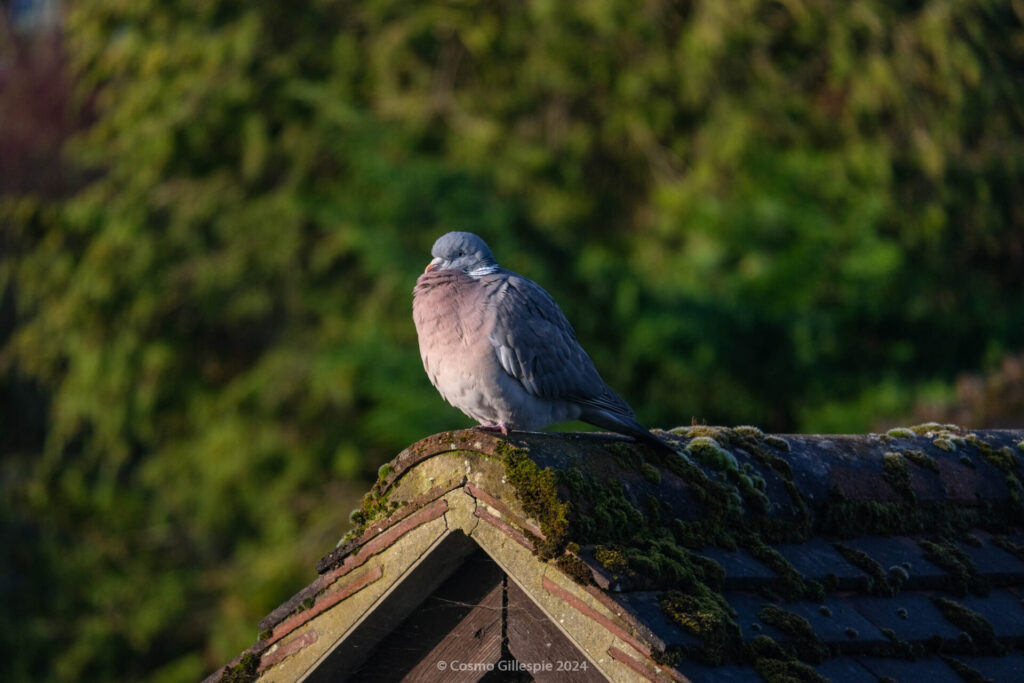
The only other shot I have to offer from this month is a lone pigeon, captured by chance on one of the cooler mornings. Other than the subject itself being fully in focus and very detailed, I find this image quite interesting because of the distortion of the trees in the background, likely caused by the lens I was using, and the resultant compression.