The largest geomagnetic event in the UK since 2003 took place on the night of the 10th-11th of this month, and I was luckily enough to be under clear skies to see it. The sight was spectacular: seeing the greens and pinks fading in and out together across the whole sky, almost unobstructed by cloud, was breathtaking, and I spent a good hour outside admiring it- and also, of course, trying to capture it with my camera. In this last part, I did not have the success which I envisioned, but I did give it a good go, and the results are passable and recogniseable, if not particularly shareable.


Above left: 30s, f/22, ISO 5000. Above right: 10s, f/22, ISO 5000.
Unfortunately, I only discovered all of the issues that I’ll now discuss when I was processing the photos the next day, as they all looked acceptable when viewed on the small screen of my camera so I made no effort to correct at the time. However, at anything like full size, the faults really become obvious. The most severe one was grain. I guessed at my settings at the time, not having an opportunity to do any research, and landed initially on an ISO of 5000, which I now know is significantly too high. This was later changed to 8000, and, accordingly, the level of grain in the final product increased.
I did experiment with exposure times, from thirty down to ten seconds, but they didn’t appear at the time to be making too much of a difference. In post-processing, I found that the main change was that there was more definition of the rays of the aurora in the shorter exposure times, and with longer ones they were more merged together and far less distinct, but filled more of the sky.
The one outlier in all of this is one photo in the middle of all the others which, for a reason now unknown to me, was taken with the settings 4.5s, f/2.8, ISO 400. The result from that is something else again, though; a step in the right direction, but not drastically better than the other photos from my camera.

The best photo of the evening is on the left, but plainly it was not taken on my camera. Instead, this is from my phone, which I was playing around with whilst I waited for a long exposure on my camera to finish. Stabilised by my mini tripod and phone grip, it needed very little editing to bring out the strong colour streaks on display in the sky that night. This is definitely one of my best captures so far, and one which I am very proud to have got. 10s, f/1.7, ISO 1600.
Alright, that’s the general photography over. Brace yourself; the rest of this update is about aviation.
With the flying season well underway, I finally got up to Duxford again, this time in much better flying weather. There wasn’t an event on, but still, as always, the airfield was busy with flying aircraft, both general civilian and historic.
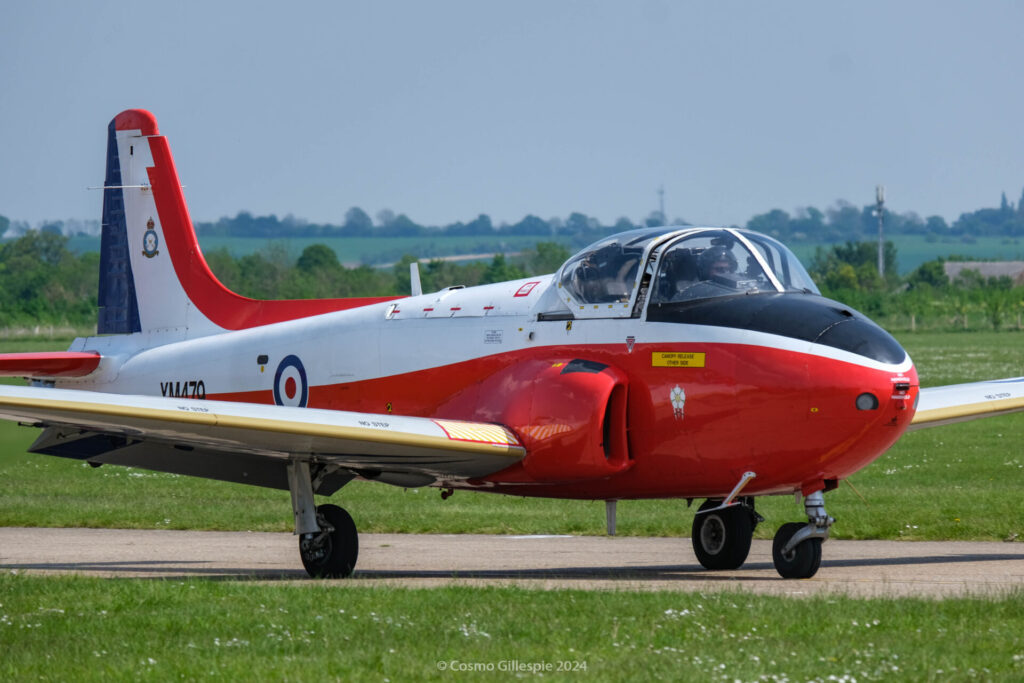
The most interesting aircraft that I saw that day, and the most unusual for Duxford, was Jet Provost G-BVEZ. This aircraft flies in a 1 FTS livery, and I managed to catch the pilot giving a wave to the crowd as he taxied past, a good split-second moment. The take-off provided some good side-on angles against the reliably blank backdrop of Cambridgeshite hills, and then it roared away into the distance.


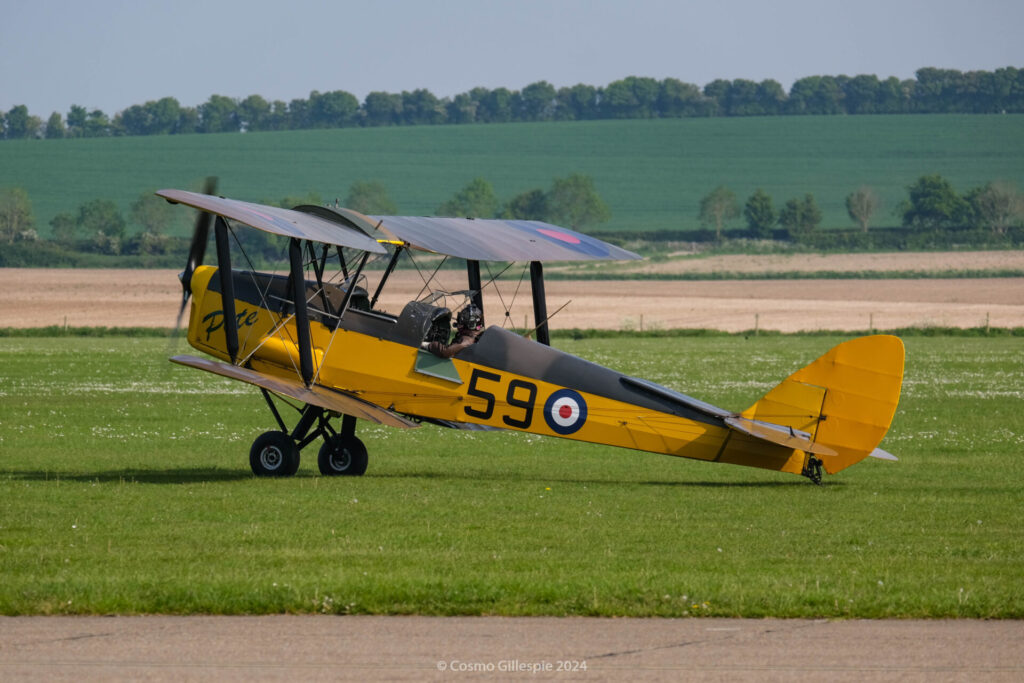
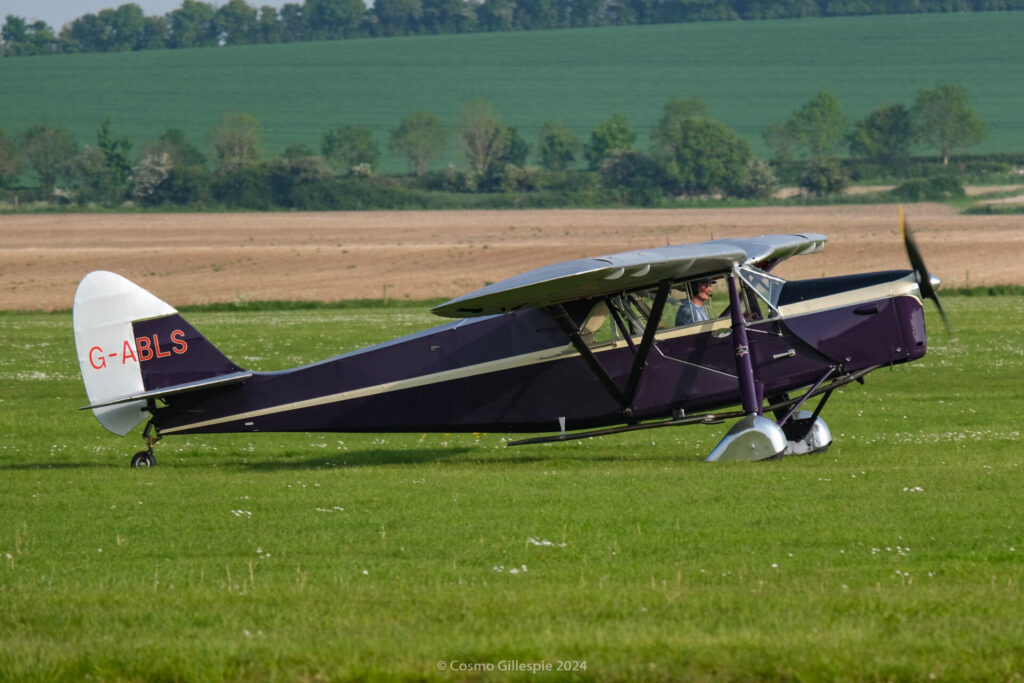
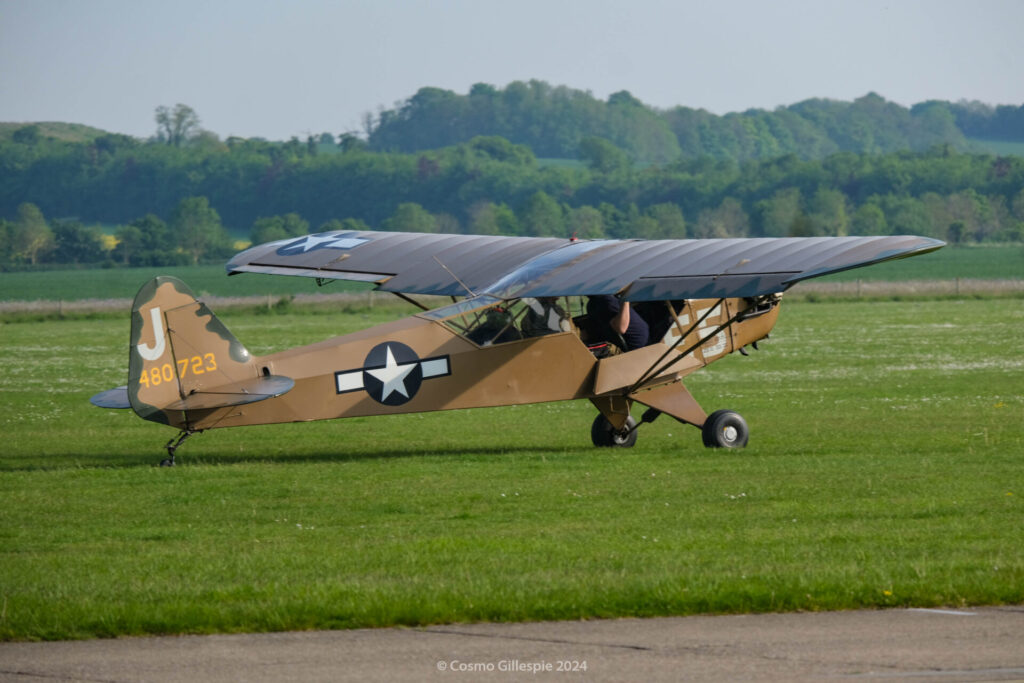
As well as this, though I saw a lot of Duxford’s resident aircraft taking to the air, such as the pair of Tiger Moths operated by Classic Wings for pleasure flights (below top left and bottom right), Piper Cub G-BFZB (below top right), two-seat Spitfire G-AWGB (below bottom right), and Puss Moth G-ABLS (below bottom middle). The PBY Catalina G-PBYA was sitting on an apron under covers, but still looking great, and certainly my favourite of the aircraft there (below top middle).


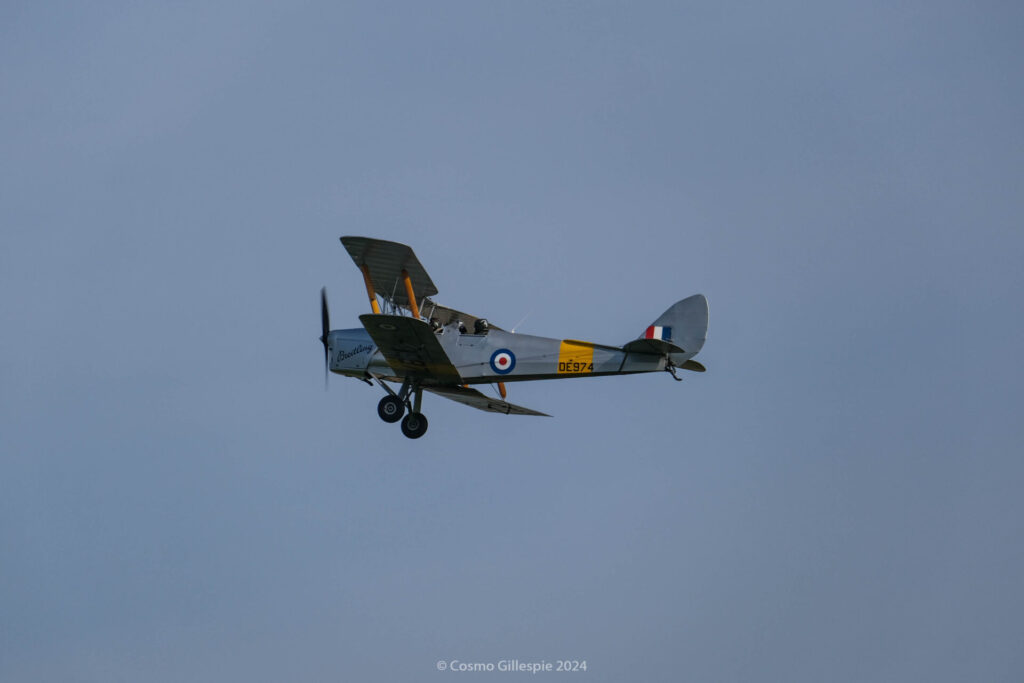

The unexpected finale to my day was a formation flypast from a French display team of seven Mudry CAP-10B light aircraft as they returned to France. It was a great way to end the visit, and a reminder that Duxford really does attract the more unusual visitors of aviation, thanks mainly to its historic past.
I would like to make it to one of their air shows this year, but I’m not sure which one. Hopefully, my next visit will be just as exciting as this one.
I also made a first visit to Sywell airfield, which lies in the countryside north east of Northampton. It is home to a number of warbirds and light civil aircraft, and generally enjoys a healthy through-flow of traffic, but at the time of my visit it was nearing the end of the day, and the only thing flying was Marchetti SF.260 G-RAZI (below top left), a light aerobatic aircraft with a cruise to rival the Jet Provost and whose pilot gave me a quick wave as he was taxiing out to take off. However, the sunset provided a brilliant background for some of the parked aircraft, particularly Yak-3UA G-OLEG (below top right). Yak-52 G-BXAK was also making some noise, but as far as I saw, only for engine runs (below bottom left).


I really like the design of Sywell’s buildings and infrastructure in terms of its committment to the 1920s/1930s aesthetic. Gates to move from one part of the airfield to another are topped with simplistic statues of soaring aircraft crossing trails, and The Aviator, a hotel, bar, and restaurant, is authentic to the aesthetic and fully-decked out with a period interior. Airside highlights are the aircraft fuel pumps and their accompanying watch office, and the small but perfectly formed control tower (right).


I paid a visit to Avro Vulcan XL426 at Southend Airport one evening to watch their first high-speed taxi run of this year. It being a ‘twilight taxi’, I was somewhat concerned about my ability to get good pictures, not having much experience with photographic aircraft in low light, let alone ones that were moving. Adding to my worry was a factor of my own addition: I was making this the first proper outing for a new lens, mentioned briefly in my February article, which has a manual variable focal length of 150 to 600 mm. It looks as you may expect on such a small camera body as mine- pretty ridiculous- but it really does do the job.

Before the show got started properly, I had an opportunity to test it on an unexpected visitor- though not an unknown one. Jet Provost G-BWSG, frequently resident at North Weald, did a number of touch-and-gos before landing, and I used it to get the feel of the large lens. The main difference was the weight, and the amount of hands I seemingly needed to operate it, so I decided thereafter to use my monopod.
As we moved closer to the start of the actual event, I got a few shots of the Vulcan in its static position outside the hangar. The sunset didn’t seem very promising at that time, but it later developed as much of the clouds left the scene, and those that remained were cast in deep pinks and purples. It became really quite spectacular, acting as the perfect background for such an impressive aircraft as the Vulcan.
Below left: A somewhat underwhelming beginning, with cloud looking to smother the sky as the Vulcan waited patiently on the pan as everyone filtered in. Below middle: The second stage of the development, after being tugged onto a more distant apron; the colours are now beginning to become apparent. Below right: Returning from the fast taxi, this was as good as it got, with a pink sky and purple clouds behind nearly-silhouetted scenery.


During the taxi runs themselves, my main worry was the speed of the aircraft, and that all of the photos would be motion blurred, and this wasn’t helped by also having to juggle my lines of sight. Being in the second row back, and with everyone standing up at the barrier, I used my monopod to get a higher angle than I would have been able to get by myself, and tilted the camera’s LCD screen down so I could see what I was doing. This worked surprisingly well, and yielded some impressive results.
The first taxi down the runway was at usual taxi speed, after a few moments of ‘howling’ from the engines at their full power. The two photos below show the visual difference between having the throttles at idle (left) and full (right): the increase in heat haze, smoke output, and flying debris, as well as an almost indescernible lowering of the nose.

The second and last taxi of the evening was the fast taxi, after which a brake chute is released to slow the aircraft appropriately before the end of the runway. This is something I was very keen to capture, as it’s really something special to see, and thankfully I managed it: the whole thing, from refuelling proble to drogue ‘chute, all in one picture, and with basically no blurring. Definitely my best picture of the Vulcan yet!


After that, it was time to wind down. After the taxiing back photo shown earlier, the aircraft pulled up to the same position it had started the evening in- though this time with the engines running. Was it loud! I was half-deafened for the next six or more hours, as I had not realised that this was part of the show, and had neglected to bring ear defenders. I suppose I could have negated more of the effects by not sitting directly in front of the engines to take head-on pictures, but those five or so minutes were worth every second.
Below left: XL426 by herself, shortly after parking up. I made sure to separate the trailing edges of her wings from the skyline to get the full low-angle effect. Below right: Now with a friend from earlier, as G-BWSG taxiied over to park just behind. I deliberately added more sky into this picture to get the sunset gradient.

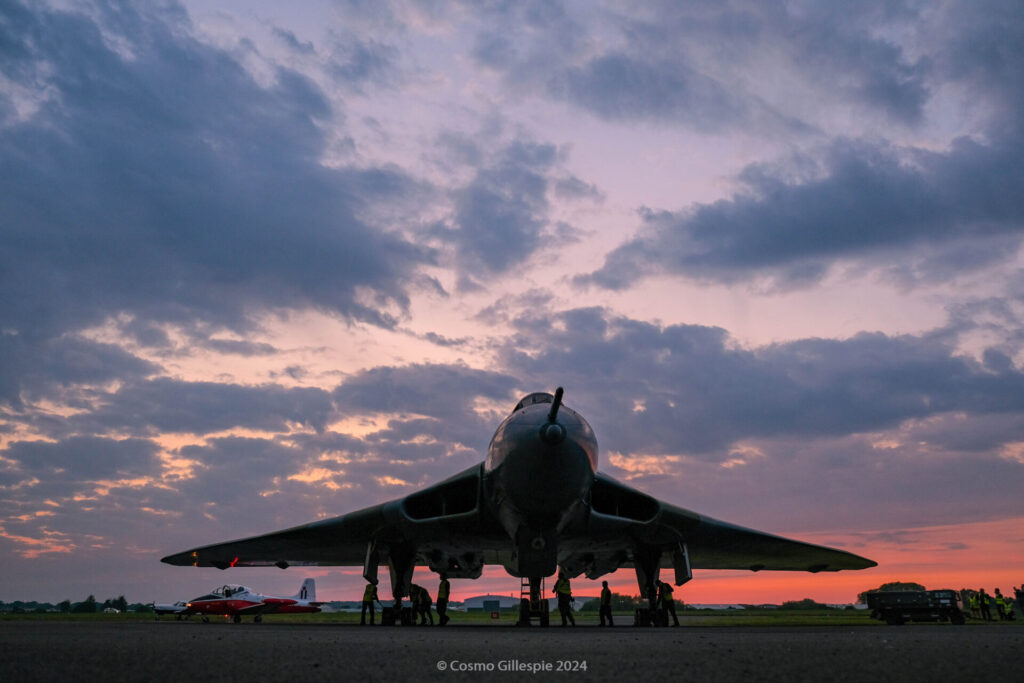
This was such a great evening, hearing the legendary howl for the first time as well as seeing the only fast-taxiing Vulcan left in the UK, if not the world. I’ve already got my tickets for her second high-speed run in September, and I just can’t wait.
For much of this month, North Weald played host to a great deal of DC-3s, mainly from America with a pair of UK residents in the mix. Their massing was staggered, and on the day of the first external arrivals, I positioned myself at the end of the runway to get some shots of them coming in to land. This was a moment when I would have liked to use my long lens, but sadly didn’t have it to hand. I did, though, get a couple of reasonable pictures of the aircraft in the distance, and the addition of context gives them a somewhat timeless feel.

Whilst waiting for those pictures, Tiger Moth G-PWBE took off and flew almost directly above me, and although it was quite unexpected I moved quickly to get some good detail shots of a very smart aircraft. I later learnt that this Moth is a new resident here, so I can expect to see it quite regularly.


In order to do practice for their upcoming displays and parachute drops, the DC-3s made many arrivals and departures over the course of their stay at the airfield. On one of the days when they were taxiing out en masse, I decided to play with my shutter speed, to see if I could get better prop blur even whilst they were moving. By this time, I had enough good photos that there was no great requirement for these ones to come out well; so it’s just as well that they didn’t, particularly.
My best result was of ‘Placid Lassie’ (below top left, 1/60s, f/22, ISO 500). There is certainly more prop blur than the baseline of automatic settings illustrated on ‘That’s All — Brother!’ (below top right, 1/1000s, f/6.4, ISO 320), but there is also more blur on the rest of the aircraft, and a great deal of unwanted grain. As well as all this, the colours have their usual green tint that seems to come with my self-made 1/60s recovery preset, though I am working to eliminate this. This was a particularly good day for fast shutter speeds, as the props on ‘That’s All — Brother!’ look practically stationary- and the whole of the photo on the left is noticeably slightly overexposed compared to that on the right. The green plastic fence wasn’t doing my photos any favours either.


I got some more close-ups when I walked down the line of aircraft after most of the flying was done for one of the days, aiming for an almost portrait style. The light was perfect for bringing out the colours of the aircraft, and as I could get so close, I maintained a good level of detail without having to zoom in and risk sacrificing quality. The positions they were parked in were brilliant for my purposes, with a good number of clear or mostly unobstructed backgrounds, and the few people who had been hanging around filtered away.
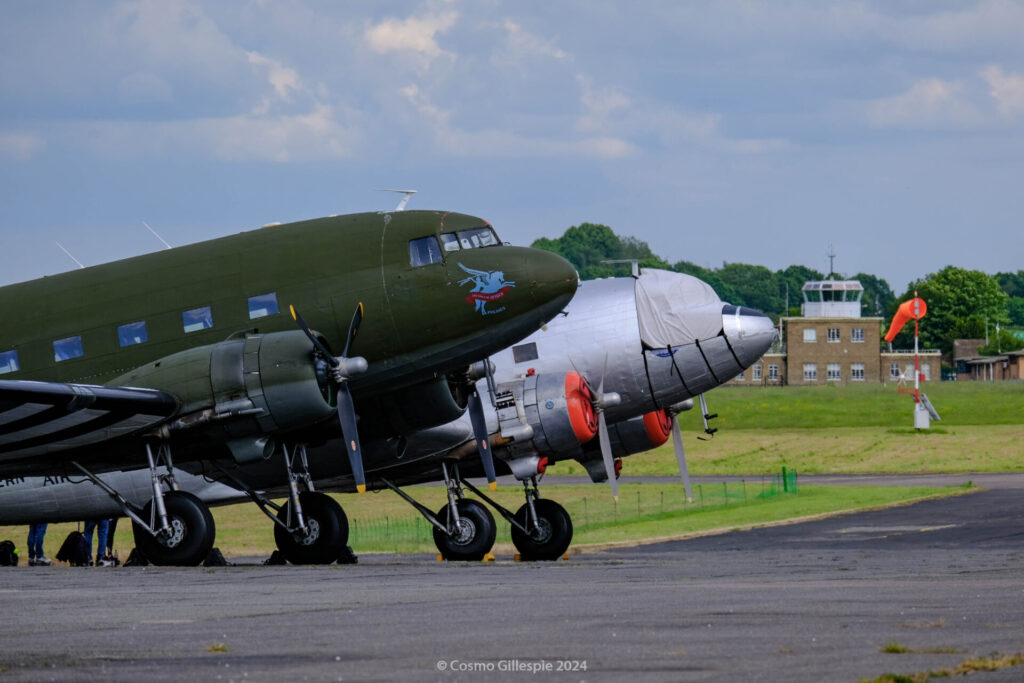
Also during this walk, I got some multiple aircraft shots, to ‘prove’ that there was more than one DC-3 there at once, not just several singles over the course of a few weeks. These included a view down the line to include the air traffic control tower, a listed building and well-known icon of the airfield (below right). The only annoying thing about this picture is the cockpit cover being on the silver aircraft. If it weren’t for that, I would have one of my favourite DC-3 pictures yet.

This was a busy month, so there aren’t too many sundry photos, and both come from various gardens. A chicken isn’t the normal user of a bird bath, but this one seemed to be enjoying it all the same! The purple flowers were a bit of an experiment in playing with the tint function in post-processing. Trying to find the balance between the flowers and the stems wasn’t easy, but I think I got the best of both worlds in the end.

